
The short answer
A new heat pump makes sense when your current system struggles to cool, needs frequent or major repairs, or is badly corroded. We inspect your home, ducts, and electrical setup, then recommend a properly sized system and give you a written quote before any work begins.
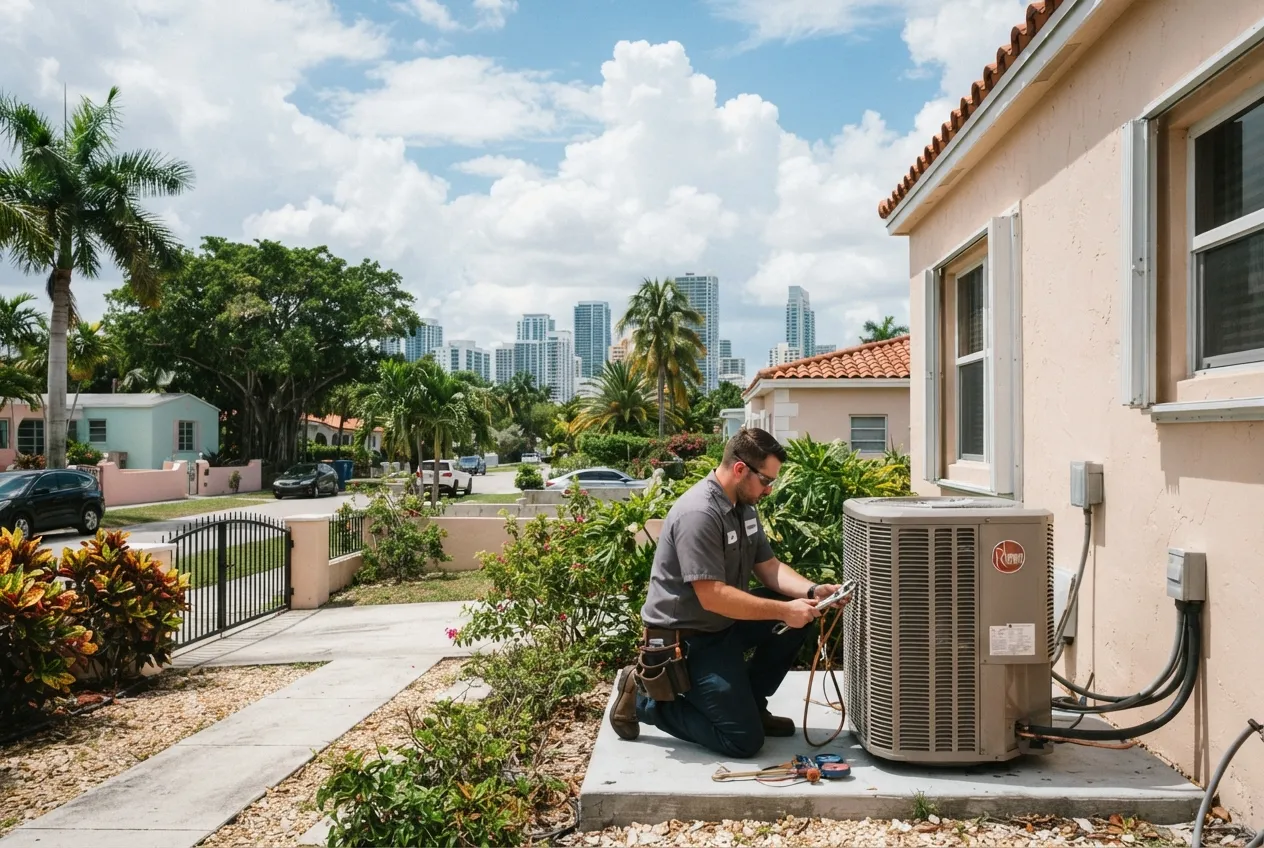
In Miami, a heat pump does most of its work as an air conditioner. Winters here are mild, so the heating side runs only on the occasional cool night, while cooling runs for most of the year. That heavy use is why choosing, sizing, and installing a heat pump correctly matters so much. RapidFix HVAC Repair Service installs heat pumps for homeowners in Miami and nearby cities. That includes replacing a worn-out heat pump, switching from an older AC with electric strip heat, and upgrading equipment that can't keep up with the humidity.
Signs It May Be Time for a New Heat Pump
Some problems are worth repairing. Others point to a system that's near the end of its useful life. These are the signs we'd want to look at:
None of these alone means you need a new system. They are a good reason to have it checked before a breakdown leaves you without cooling in the middle of summer.
- The system runs almost nonstop in summer and the house still feels warm or sticky.
- Your power bills have climbed even though your habits haven't changed.
- Repairs are getting more frequent, or the same part keeps failing.
- The outdoor unit shows heavy corrosion on the coil, cabinet, or refrigerant lines, which is common near salt air.
- The system uses an older refrigerant that is becoming harder to service.
- Some rooms are noticeably warmer or more humid than others.
- You hear grinding, rattling, or loud buzzing from the indoor or outdoor unit.
- Heat on cool mornings is weak, or a burning smell lasts longer than the first few minutes.
What We Check Before Recommending a System
A good installation starts with an honest look at the house, not just the old equipment. Swapping in a unit of the same size isn't always right, especially if the home has had new windows, added insulation, or an addition since the last system went in.
We use what we find to size the system and to tell you about anything that should be fixed along with the installation.
- Home size, layout, window exposure, insulation, and how the house gains heat through the day
- Existing ductwork: size, leaks, damage, and whether it can deliver enough airflow to every room
- The electrical panel and the circuit serving the outdoor unit
- The condensate drain line and pan, which handle a lot of water in humid months
- The outdoor unit location, including drainage, flooding risk, and wind exposure
- Thermostat compatibility and placement
- Indoor humidity levels and any signs of moisture problems
Repair or Replace: Your Options
If your current heat pump is still in reasonable shape, a repair may be the sensible choice. A failed capacitor, contactor, or fan motor, or a clogged drain line, is usually fixable without replacing anything major. We'll tell you when that's the case.
Replacement makes more sense when a major component like the compressor or outdoor coil fails on an older system, when repairs keep piling up, or when the equipment can't handle your home's cooling and humidity load. If you replace, you'll usually have several choices:
We'll explain the trade-offs in plain terms so you can decide what fits your home and budget.
- Replacing the outdoor unit and indoor air handler together so the components are properly matched
- Choosing single-stage, two-stage, or variable-speed equipment, depending on how much you value steady temperatures and humidity control
- Adding duct sealing, a smart thermostat, or better filtration
- Ductless mini-split heat pumps for additions, converted garages, or homes without ducts
What Affects the Cost
Every installation is quoted for the specific home. The main factors are:
Florida Power & Light runs a Residential HVAC program with rebates on qualifying high-efficiency central air conditioners and heat pumps, applied through participating contractors at the time of installation. Program terms can change, so we confirm the current details before including them in a quote. The federal Energy Efficient Home Improvement Credit (25C) covered qualifying heat pumps placed in service before December 31, 2025. It is not available for new installations now.
- System capacity and efficiency rating
- Single-stage versus two-stage or variable-speed equipment
- Whether the air handler, ductwork, or both need replacing
- Electrical upgrades, such as a new breaker or disconnect
- Access to the equipment, such as tight closets, attics, or rooftop units
- Mounting needs for the outdoor unit, such as raised stands or tie-downs
- Permits and inspections required by your city or county
How an Installation Visit Works
First, we schedule an in-home assessment at a time that works for you. A technician inspects your current system, ductwork, and electrical setup, takes measurements, and asks how the house feels day to day. You'll get a written recommendation and quote that spell out the equipment and the work included.
On installation day, the crew protects floors and work areas, recovers refrigerant from the old system, and removes the old equipment. They set and secure the new outdoor unit, install or connect the air handler, make the refrigerant and electrical connections, and test the condensate drain.
Before we leave, we start the system and check refrigerant charge, airflow, and temperatures in both cooling and heating modes. We also show you how to use the thermostat and change the filter. If your city or county requires a permit inspection, we coordinate it.
A timing tip: in the Miami area, May through October is the wet season, with heavy cooling demand and frequent afternoon storms, and hurricane season runs from June 1 to November 30. Planning a replacement during the drier months of November through April often makes scheduling easier.
Heat Pump Installation by city
- Heat Pump Installation in Miami BeachLocal service & repairs
- Heat Pump Installation in North Bay VillageLocal service & repairs
- Heat Pump Installation in West MiamiLocal service & repairs
- Heat Pump Installation in Miami SpringsLocal service & repairs
- Heat Pump Installation in SurfsideLocal service & repairs
- Heat Pump Installation in Bay Harbor IslandsLocal service & repairs
- Heat Pump Installation in Coral GablesLocal service & repairs
- Heat Pump Installation in North MiamiLocal service & repairs
- Heat Pump Installation in South MiamiLocal service & repairs
- Heat Pump Installation in Opa-lockaLocal service & repairs
- Heat Pump Installation in HialeahLocal service & repairs
- Heat Pump Installation in North Miami BeachLocal service & repairs