
The short answer
If your AC is blowing warm air, running nonstop, leaking water or making new noises, it needs a diagnostic before a small problem becomes a bigger one. Most issues, like failed capacitors, clogged drain lines or worn fan motors, can be repaired, and we explain the cause and price before any work begins.
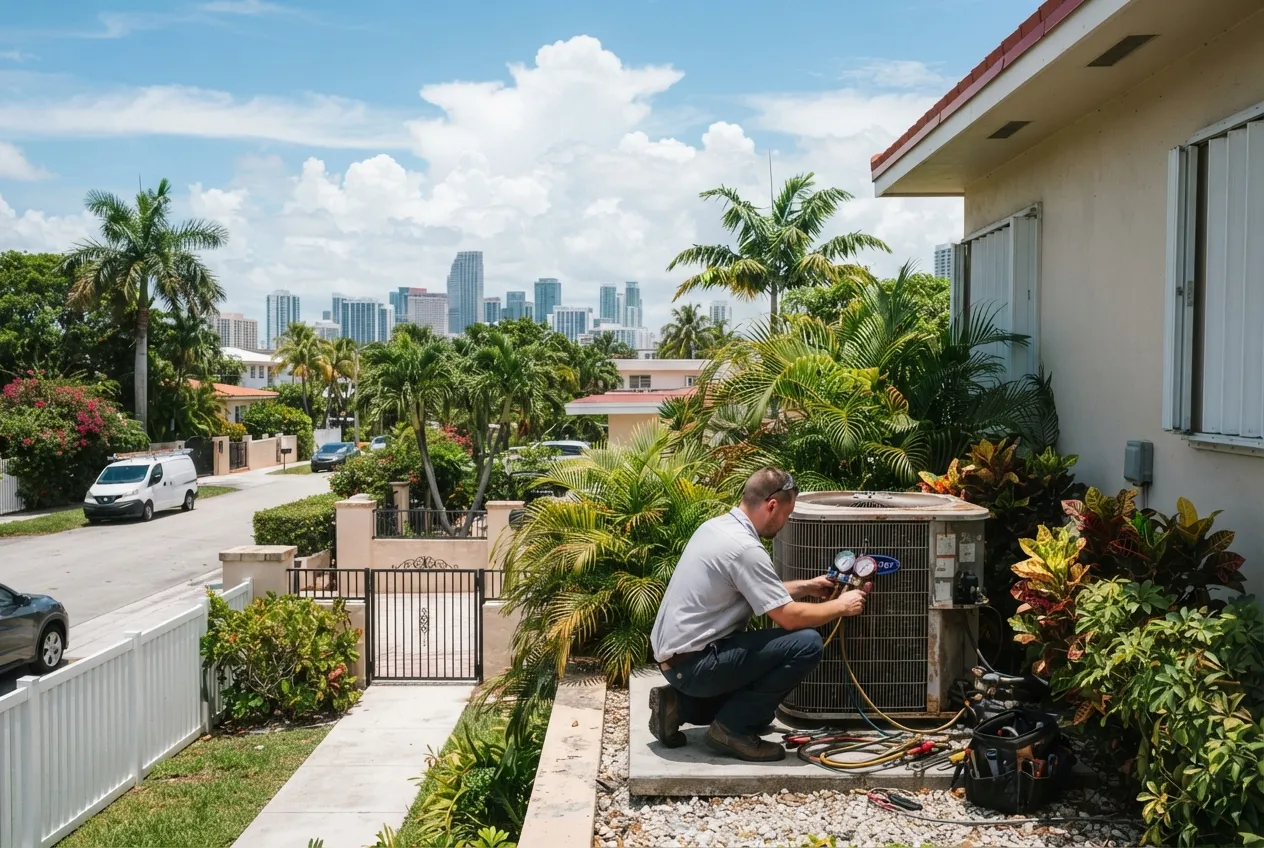
In Miami, your air conditioner isn't just a summer appliance. It runs most of the year, and it works hardest from May through October, when the wet season brings heat, heavy humidity and frequent afternoon thunderstorms. When a system starts struggling, the house gets sticky fast. RapidFix HVAC Repair Service diagnoses and repairs central air conditioners and heat pumps for homeowners in Miami, Miami Beach and nearby cities. This page covers the warning signs worth acting on, what a technician actually checks, how to think about repairing versus replacing, what affects the cost of a repair, and what to expect from the moment you contact us until your system is cooling again.
Signs Your AC Needs Repair
Small problems usually show up before a full breakdown. Catching them early often means a simpler repair and less time without cooling. Schedule service if you notice any of these:
If you see ice, smell burning, or the breaker keeps tripping, turn the system off at the thermostat and leave it off until it's checked. Running it in that condition can turn a small repair into a much larger one.
- Air from the vents feels cool but not cold, or the house never reaches the thermostat setting on a hot afternoon.
- The system runs almost nonstop, or turns on and off every few minutes (short cycling).
- Rooms feel damp or clammy even when the temperature looks right, a sign the system isn't removing enough humidity.
- Water pooling near the indoor unit, a ceiling stain below an attic air handler, or a float switch that keeps shutting the system off.
- Ice on the refrigerant lines or the indoor coil.
- New noises, such as buzzing, clicking, grinding, squealing or a loud bang at startup.
- A burning, musty or sour smell coming from the vents.
- The outdoor fan isn't spinning, or the outdoor unit hums but won't start.
- The breaker for the AC trips more than once.
What We Check During a Diagnostic
A good repair starts with finding the actual cause, not just treating the symptom. Our technicians work through the whole system so the fix holds up. A typical diagnostic covers:
Afterward, we explain what we found in plain terms, show you the failed part when we can, and tell you what we recommend and why before any repair work begins.
- Thermostat settings, wiring and batteries, so we're not chasing a control problem.
- Air filter condition and airflow through the return and supply vents.
- Indoor evaporator coil and blower motor, including dirt buildup that restricts airflow.
- Condensate drain line, drain pan and float switch, which clog easily in humid weather.
- Outdoor condenser coil, fan motor and fan blade.
- Capacitors, contactor and electrical connections, which take a beating from heat and power surges.
- Refrigerant pressures and temperatures, to check for low charge or signs of a leak.
- Compressor operation and electrical draw.
Repair or Replace: How to Decide
Most AC problems are repairable. A failed capacitor, a clogged drain line, a worn fan motor or a dirty coil can usually be fixed in a single visit, and the system goes back to normal. Replacement starts to make sense when the repair is major and the equipment is already near the end of its useful life.
When we talk through the decision with you, we look at:
If replacement is on the table, Florida Power & Light runs a Residential HVAC program that offers rebates on qualifying high-efficiency central air conditioners and heat pumps, delivered through participating contractors at the time of installation. We confirm the current program terms before including them in any quote. Note that the federal Energy Efficient Home Improvement Credit (25C) only covered qualifying heat pumps placed in service before December 31, 2025, so it isn't available for new installations now. Either way, we'll give you a straight recommendation, and the decision is yours.
- The age and overall condition of the indoor and outdoor units.
- Whether the problem involves a major component, such as the compressor or the evaporator coil.
- Whether there's a refrigerant leak that keeps coming back.
- How often the system has needed repairs recently.
- Whether the system still keeps your home comfortable and dry.
- How long you plan to stay in the home and how much energy efficiency matters to you.
What Affects the Cost of AC Repair
We can't give an accurate repair price until we know what's wrong, but these are the factors that shape the final cost:
You'll get the price for the recommended repair and approve it before we start, so there are no surprises on the bill.
- The part that failed. Small electrical parts cost far less than a compressor or coil.
- Labor time and access. An air handler in a cramped attic or tight closet takes longer to work on than one in an open utility room.
- Refrigerant type and amount, especially on older systems that use refrigerant that has been phased out.
- Whether a leak has to be located and repaired before the system can be recharged.
- Parts availability for your equipment's brand and model.
- Timing, such as evening, weekend or urgent calls during the busiest part of the year.
- Related damage, like corrosion on outdoor units from salt air near the coast, or water damage from an overflowing drain pan.
How an AC Repair Visit Works
Here's what to expect when you schedule AC repair with RapidFix:
During hurricane season, which runs from June 1 to November 30, storms and power surges can damage outdoor units and electrical parts. After a storm, make sure the outdoor unit is clear of debris and standing water before turning the system back on, and contact us if it won't start or the breaker trips.
- You contact us, describe what the system is doing, and we set up a service window.
- The technician arrives, asks a few questions and looks at your thermostat, filter and both units.
- We diagnose the problem and explain the cause and your options.
- You approve the repair before any work starts.
- We complete the repair, run the system through a full cooling cycle, and confirm the air at the vents is cold and the drain is flowing.
- We point out anything worth keeping an eye on and answer your questions before we leave.
AC Repair by city
- AC Repair in Miami BeachLocal service & repairs
- AC Repair in North Bay VillageLocal service & repairs
- AC Repair in West MiamiLocal service & repairs
- AC Repair in Miami SpringsLocal service & repairs
- AC Repair in SurfsideLocal service & repairs
- AC Repair in Bay Harbor IslandsLocal service & repairs
- AC Repair in Coral GablesLocal service & repairs
- AC Repair in North MiamiLocal service & repairs
- AC Repair in South MiamiLocal service & repairs
- AC Repair in Opa-lockaLocal service & repairs
- AC Repair in HialeahLocal service & repairs
- AC Repair in North Miami BeachLocal service & repairs