
The short answer
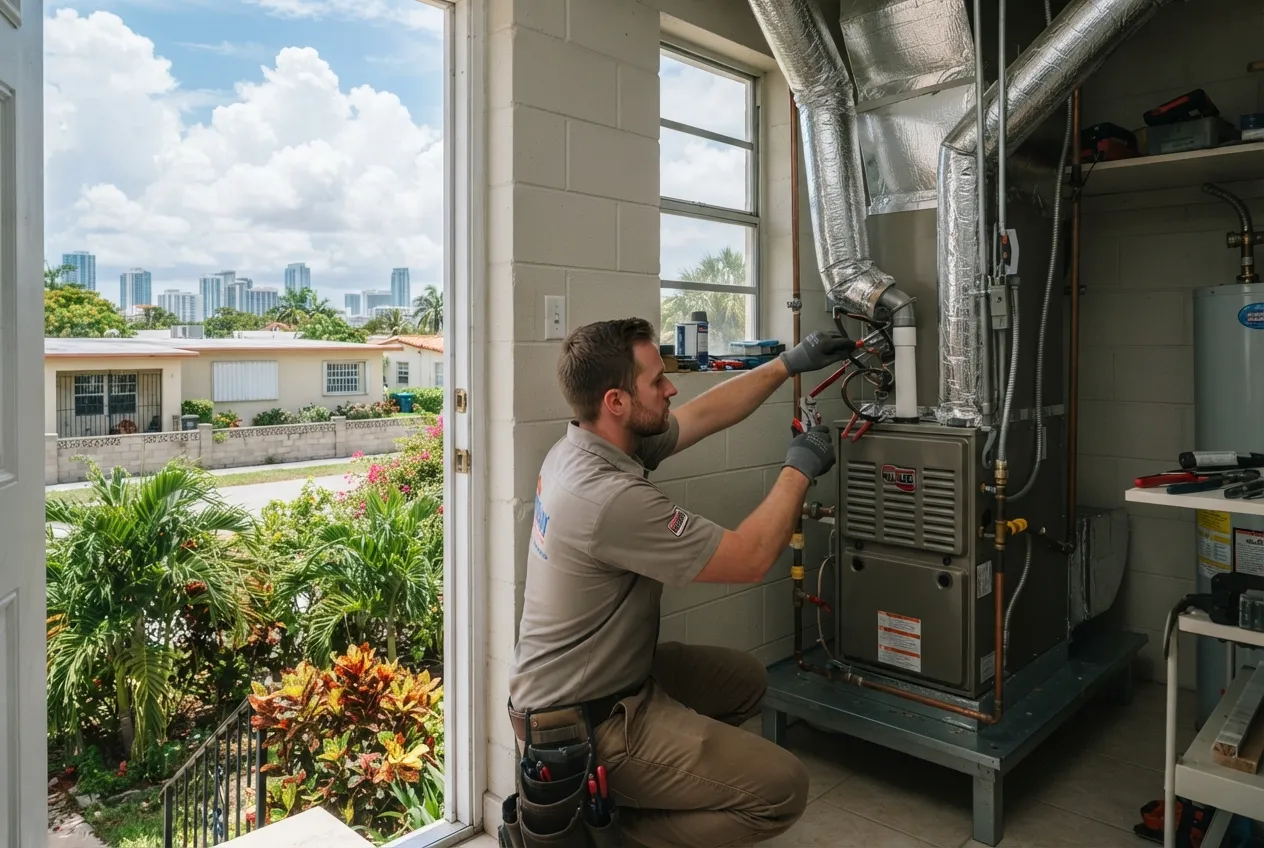
Most Miami homes heat with electric heat strips or a heat pump rather than a gas furnace, so furnace installation here usually means replacing those parts or the air handler that holds them. RapidFix inspects the whole system first, then explains your repair and replacement options so you can choose what makes sense.
In Miami, "furnace" usually means something different than it does up north. Most local homes don't have a gas furnace. They rely on electric heat strips inside the air handler, or on a heat pump that runs in reverse on the few cool mornings each winter. RapidFix installs and replaces heating equipment for homeowners in Miami and nearby cities. We'll tell you plainly whether you need new heating equipment, a simple repair, or a heat pump that handles both cooling and heating in one system.
Signs You Need a New Furnace or Heating System
Heat runs only a handful of days a year here, so problems often go unnoticed until the first cold front of winter. When you switch to heat and something seems off, these are the signs worth paying attention to:
One sign on its own doesn't mean you need a replacement. A tripped breaker might be a loose connection, and a brief smell is often just dust. That's why we inspect before recommending anything.
- A burning smell that lingers well past the first few minutes of running the heat
- Heat that comes on but never warms the house, or only warms some rooms
- Breakers that trip whenever the heat runs
- Buzzing, clicking or rattling from the air handler
- Higher winter electric bills without any change in how you use the system
- Rust, corrosion or water damage inside the air handler cabinet
- Equipment old enough that replacement parts are hard to find
What We Check Before Recommending Installation
In South Florida, heating has to work with your cooling system. The two usually share the same air handler, ductwork and thermostat. Before we recommend any equipment, we look at the whole setup:
We also ask how you use your heat. A household that wants a few warm mornings each winter needs something different from one that keeps the house warm whenever temperatures dip.
- Heat strip elements, sequencers, relays and limit switches
- Electrical supply, including breaker size, wire gauge and disconnect condition
- Heat pump reversing valve, defrost controls and refrigerant charge, if you have a heat pump
- Ductwork condition and sealing, especially in hot, humid attics where tape and insulation break down
- Drain pan and condensate line, since the air handler runs most of the year
- Thermostat compatibility and wiring
- Gas line, venting and carbon monoxide safety in homes that have a gas furnace
Repair vs. Replace: Your Options
Many heating problems in Miami can be repaired. Heat strips, sequencers and limit switches are individual parts that can be swapped without replacing the air handler. If the rest of your system is in good shape, repair is usually the sensible choice.
Replacement makes more sense when the air handler is corroded, the cooling side is also near the end of its life, or repeated repairs keep adding up. Because heating and cooling share equipment here, it often pays to plan them together instead of replacing one piece now and another next year.
If you're considering a heat pump, Florida Power & Light runs a Residential HVAC program with rebates on qualifying high-efficiency central air conditioners and heat pumps, applied through participating contractors at installation. Program terms can change, so we confirm the current details before including them in a quote. The federal Energy Efficient Home Improvement Credit (25C) no longer applies. It covered qualifying heat pumps placed in service before December 31, 2025, and isn't available for new installations.
- Repair the existing heat strips or controls
- Replace the heat strips with new ones sized for your home and air handler
- Replace the air handler with new heat strips, matched to your existing outdoor unit
- Switch to a heat pump system that cools and heats, which typically uses less electricity for heating than heat strips
- Repair or replace a gas furnace where one is already installed
What Affects the Cost
We can't give a fair price without seeing your home, but these are the factors that move the cost up or down:
We explain each item on the quote so you can see what you're paying for and decide what's worth doing now.
- Type of equipment: heat strips only, a full air handler, a heat pump system or a gas furnace
- Capacity needed for your home's size, insulation, windows and layout
- The efficiency rating of the equipment you choose
- Electrical work, such as a new breaker or new wiring
- Ductwork repairs, sealing or changes
- Access, including tight closets, attic installs and condo building rules
- Permits and inspections required where you live
- Whether you replace heating and cooling at the same time
How an Installation Visit Works
Every job follows the same basic steps, so you know what to expect:
Timing is worth thinking about too. Miami's wet season runs May through October with frequent afternoon thunderstorms, and hurricane season runs June 1 to November 30. The drier months from November through April are a convenient time for heating work, and they're also when you'll actually use the heat.
- Inspection: a technician checks the air handler, heating parts, electrical, ducts and thermostat, and asks what you've noticed
- Explanation: we show you what we found and walk through repair and replacement options in plain terms
- Written quote: you get a clear quote and time to decide, with no pressure
- Installation: we protect your floors, remove the old equipment, install the new system and connect the electrical and thermostat
- Testing: we run heating and cooling modes and check airflow, temperatures and electrical draw
- Walkthrough: we show you thermostat settings, filter location and what to watch for