
The short answer
A ductless mini-split is a good choice when a room has no ductwork, stays hotter or more humid than the rest of the house, or relies on window units that can't keep up. We size and place the system based on the room, your electrical panel, and a secure spot for the outdoor unit, then give you a written quote before any work begins.
A ductless mini-split cools, and can also heat, individual rooms without the ductwork a central system needs. Each indoor unit mounts on a wall or ceiling and connects to an outdoor condenser through a small opening for the refrigerant lines, power, and condensate drain. For homes in Miami, Miami Beach, and nearby cities, that makes mini-splits a practical fit for additions, converted garages, older houses without ducts, and rooms the main system never keeps comfortable. This page explains when a mini-split makes sense, what we look at before recommending one, what drives the cost, and how an installation visit works.
Signs a Ductless Mini-Split May Be Right for Your Home
Air conditioning runs for most of the year in South Florida. The wet season from May through October brings heat, humidity, and afternoon thunderstorms, and even the sunnier, less humid months from November through April rarely give a long break. When one part of the house can't keep up, you notice it quickly. These are the situations where a mini-split is often worth considering:
- A room addition, enclosed porch, or converted garage that has no ductwork
- A bedroom or home office that stays hotter or more humid than the rest of the house
- Window units that are noisy, block light, or no longer keep the room comfortable
- An older home where adding ductwork would mean opening walls and ceilings
- An upstairs area the central system can't push enough cool air to reach
- A preference for cooling only the rooms you actually use instead of the whole house
What We Check Before Recommending a System
A mini-split only works well if it's sized and placed correctly. An oversized unit cools a room fast but shuts off before it pulls enough moisture out of the air, which leaves the space feeling clammy. An undersized unit runs nonstop and still falls behind on hot afternoons. So we start by looking at the space itself, not a catalog.
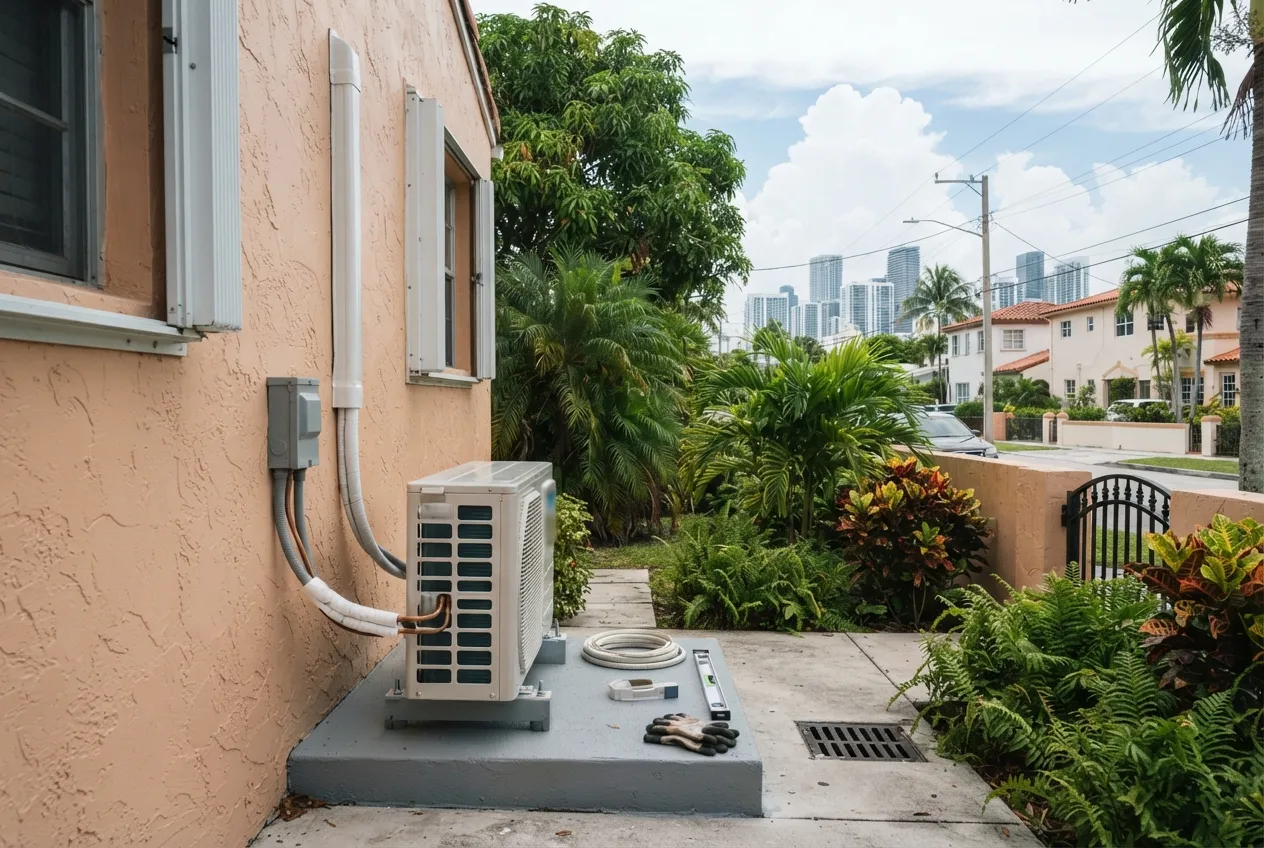
We also think about how the outdoor unit will hold up. Hurricane season runs from June 1 to November 30, so outdoor equipment needs a secure mount and a location that drains well after heavy rain. We'll walk through placement options with you rather than defaulting to whatever is quickest to install.
- Room size, ceiling height, window area, and which direction the room faces
- Insulation, sun exposure, and how many people use the room and when
- Wall construction and the cleanest path for refrigerant and drain lines
- Where the outdoor condenser can sit on a stable pad or bracket with good airflow
- Your electrical panel's capacity and whether a dedicated circuit is needed
- Where condensate water will drain so it doesn't stain walls or pool near the foundation
Repair, Replace, or Add a New System
If you already have a mini-split, a new installation isn't always the answer. Many common problems, such as weak airflow, water dripping from the indoor unit, rattling or buzzing, or a unit that won't respond to the remote, come from clogged filters, blocked drain lines, dirty coils, sensor faults, or low refrigerant caused by a leak. Those can often be repaired.
Replacement starts to make more sense when the compressor has failed, the system uses an older refrigerant that is hard to service, the same repairs keep coming back, or the unit was never large enough for the room. If the space has no system yet, the choice is usually between a single-zone mini-split for one room and a multi-zone setup that runs several indoor units from one outdoor condenser. We'll explain the trade-offs in plain terms and let you decide.
What Affects the Cost of a Mini-Split Installation
Every home is different, so we provide a written quote after seeing the space. These are the main factors that move the price up or down:
On incentives: Florida Power & Light runs a residential HVAC program with rebates on qualifying high-efficiency central air conditioners and heat pumps, delivered through participating contractors at the time of installation. Whether a specific system qualifies depends on the program's current terms, so we confirm them before including anything in a quote. The federal heat pump tax credit (25C) only covered equipment placed in service before December 31, 2025, so it does not apply to new installations now.
- Number of zones and indoor units
- Cooling capacity needed for each room
- Efficiency rating of the equipment and whether it includes heat pump heating
- Indoor unit style: wall-mounted, ceiling cassette, floor-mounted, or concealed ducted
- Length and difficulty of the line set run between indoor and outdoor units
- Electrical work, such as a new circuit or a panel upgrade
- Mounting needs for the outdoor unit, including wall brackets or raised pads
- Permits required by your city or county
How an Installation Visit Works
Here's what to expect from the first visit to the finished job:
A single-zone installation is often completed in a day, while multi-zone systems can take longer depending on line runs and electrical work. We'll give you a time estimate along with your quote so you can plan around it.
- Assessment: A technician looks at the rooms you want to cool, checks electrical and mounting options, and asks how you use the space.
- Recommendation and quote: You get a written proposal listing the equipment, indoor unit locations, and scope of work.
- Installation: We mount the indoor and outdoor units, drill a small opening for the line set, run refrigerant, power, and drain lines, and seal the wall penetration.
- Testing: We pressure-test and evacuate the lines, charge the system, and check airflow, temperature, and drainage.
- Walkthrough: We show you how to use the remote, clean the filters, and recognize early warning signs of trouble.